Repair
Lock Repair in Hawthorn
Locks rarely fail without warning. They get stiffer, they need a lift or a shove, they only turn if the key is held at a certain angle. Most people live with those symptoms for a while before ringing anyone.
This page explains what those signs usually mean, when a repair is reasonable and when replacing the hardware is the more sensible option.
- Keyline
- Service
- Solution
Signs a lock needs attention
- The key needs to be jiggled, angled or forced to turn
- You have to lift, push or lean on the door to lock it
- The handle feels loose, droops, or does not spring back
- The bolt no longer extends fully, or catches on the strike plate
- The lock has become noticeably stiffer over a season
- Visible damage to the escutcheon, cylinder or surrounding timber
- The door locks from one side but not the other
Common lock problems
A large share of "broken lock" calls are actually alignment problems. Timber doors move with the weather, houses settle, and hinges wear. When the bolt and the keeper no longer line up, a perfectly good lock stops working properly.
The rest tend to be genuine mechanical faults: worn internal components, a damaged cylinder, a broken spring or handle mechanism, or corrosion on an exposed external door. Keys themselves are another culprit — a worn or badly cut copy can wear a cylinder over time.
When repair may be appropriate
Repair often makes sense when the hardware is otherwise sound, the fault is mechanical rather than structural, parts are available for that lock, and the door and frame are in reasonable condition. Adjustment, servicing or replacing a single component can restore normal operation.
When replacement may be more practical
Replacement tends to be the better option when the lock has significant internal wear, when parts are no longer obtainable, when there is water or impact damage, or when the same fault has already been repaired before. If a repair would cost close to a replacement and last a fraction as long, we will say so.
We cannot claim every lock can be repaired. Some cannot, and pretending otherwise wastes your time.
What to tell us when you ring
- Which door it is — front, back, garage, unit entry, office, shopfront
- What the door is made of, as best you can tell
- What the lock does and does not do right now
- Whether it changed suddenly or got worse gradually
- Whether you still have a working key
- Whether anyone has worked on it before
Straight up
We do not diagnose a lock remotely. The description you give us helps us prepare, but the assessment happens at the door.
Behind the door
Which part is actually the problem?
Tap a component to see what it does. Knowing which one has failed is the difference between a small fix and replacing hardware unnecessarily.
Cutaway
Five parts, one door
Knowing which part is at fault is the difference between a small fix and replacing hardware that did not need replacing.
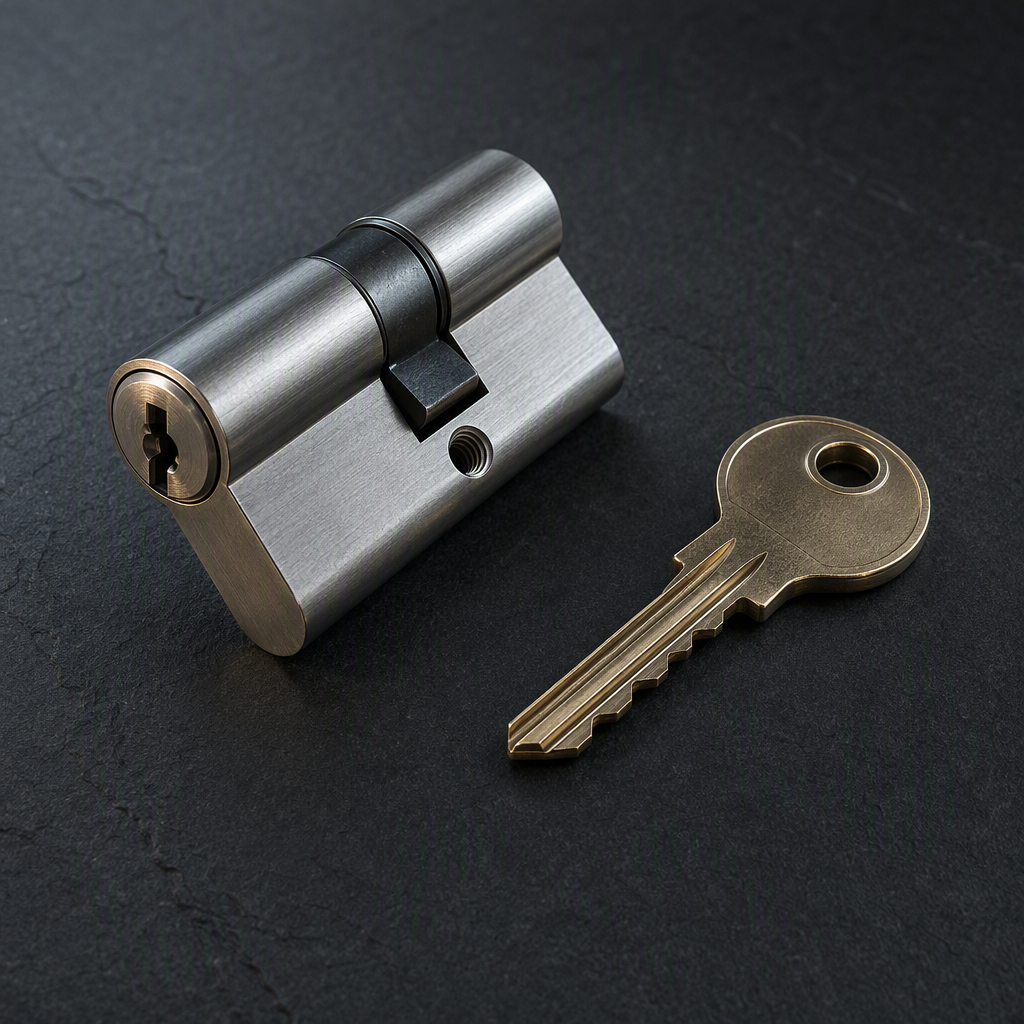
The key is cut to match one specific mechanism. If a key is bent, worn or copied poorly, the lock can feel faulty when the key is the real problem.
The cylinder reads the key. On many doors it can be changed on its own, which is why "changing the locks" does not always mean replacing everything.
The body houses the working parts and connects the handle and key to the bolt. Internal wear here often shows up as a lock that turns roughly or not at all.
This is the part that actually holds the door shut. If the bolt no longer meets its keeper cleanly, the door can feel loose or refuse to lock.
The frame and strike plate carry the load. Timber movement, settling or a previous repair can throw alignment out and affect an otherwise healthy lock.
No. Some faults can be adjusted or serviced, and others mean the hardware has reached the end of its useful life. We assess the specific lock rather than assume.
Often it is the alignment between the door, the frame and the bolt rather than the lock mechanism itself. It still needs looking at, because forcing it wears the hardware.
Sometimes, but not always. If a repair is unlikely to hold, we will explain why replacing the hardware may be the better use of your money.
Got a lock that is playing up?
Tell us what it is doing and which door it is on. We will let you know what we would need to look at.