Education
Door Security Upgrades in Hawthorn
This page is meant to be useful rather than persuasive. Security requirements genuinely differ between properties, and the honest answer to "what should I upgrade?" almost always starts with "it depends on what you already have".
What follows is the way we think about it when someone asks us to look at a property.
- Keyline
- Service
- Solution
Start with what is already there
Before adding anything, it is worth knowing what the property currently has. Which doors have locks. What condition those locks are in. Whether they actually operate as intended. A surprising number of properties have good hardware that is not working properly, which is a different problem to having inadequate hardware.
Door hardware and the door itself
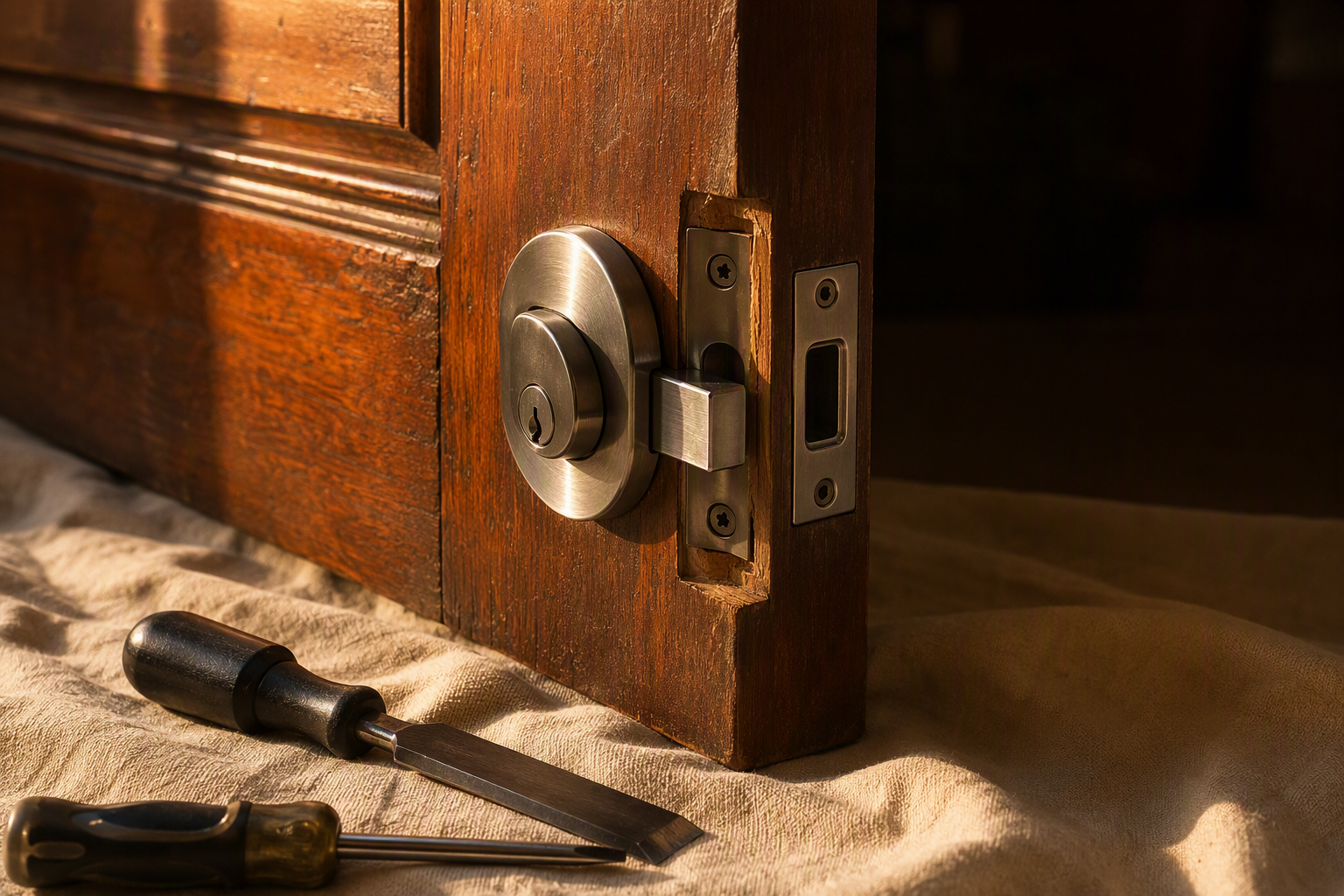
A lock is only as useful as the door and frame around it. A solid lock in a weak frame, a hollow door, or a frame with rotted timber does not perform the way the hardware suggests. That is why we look at the whole assembly rather than just the lock.
Entry points people forget
- The back door, especially if it is rarely used
- A pedestrian door on the side of a garage
- Laundry, store room and cellar entries
- Side gates that provide access to the rear of a property
- Internal doors between a garage and the house
- Service and rear doors on commercial premises
Property type changes the answer
A single-fronted house, a unit in a shared block and a retail tenancy have genuinely different considerations. In an apartment you may have limited scope to change hardware and a building system to work within. In a shop the priority might be the end-of-day locking routine rather than the lock specification.
Key control
Knowing who holds a working key is often more useful than adding hardware. Key control is about how many keys exist, who has them, and whether they can be copied casually. For businesses with staff turnover, this matters more than most things.
What matters to you
Some people want a door that is straightforward for an older relative to operate. Some want fewer keys on the ring. Some want the rear of the property tightened up. These are legitimate priorities and they change what an appropriate upgrade looks like.
Potential upgrades
- Replacing worn or damaged hardware with suitable current hardware
- Adding a secondary lock where the door and frame can carry one
- Fitting locks to entries that currently have none
- Reorganising key arrangements to reduce the number of keys in circulation
- Correcting alignment and frame issues so existing locks work as intended
Which of these apply to your property is a site question, not a website question.
Straight up
No lock, and no combination of locks, makes a property completely secure. We will not imply otherwise, and we will not use fear to sell hardware.
Behind the door
Which part is actually the problem?
Tap a component to see what it does. Knowing which one has failed is the difference between a small fix and replacing hardware unnecessarily.
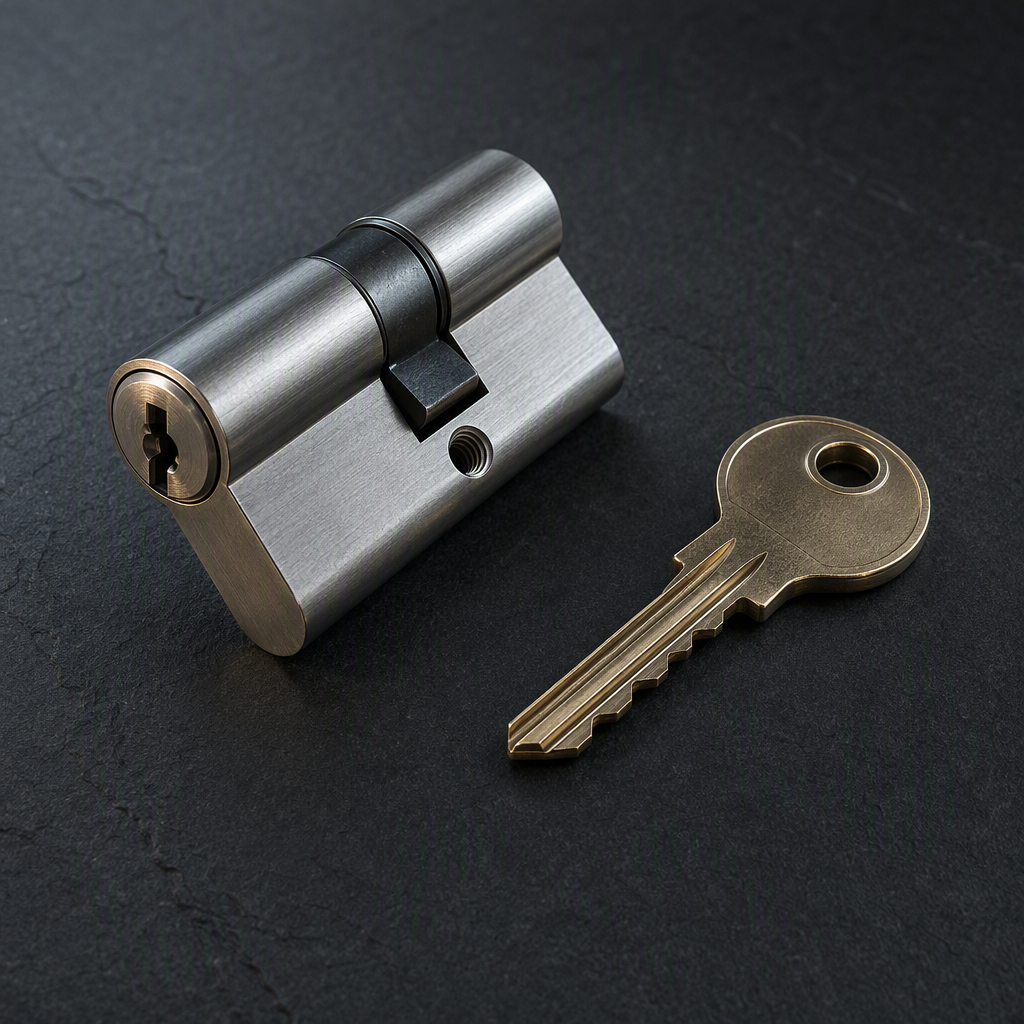
Cutaway
Five parts, one door
Knowing which part is at fault is the difference between a small fix and replacing hardware that did not need replacing.
The key is cut to match one specific mechanism. If a key is bent, worn or copied poorly, the lock can feel faulty when the key is the real problem.
The cylinder reads the key. On many doors it can be changed on its own, which is why "changing the locks" does not always mean replacing everything.
The body houses the working parts and connects the handle and key to the bolt. Internal wear here often shows up as a lock that turns roughly or not at all.
This is the part that actually holds the door shut. If the bolt no longer meets its keeper cleanly, the door can feel loose or refuse to lock.
The frame and strike plate carry the load. Timber movement, settling or a previous repair can throw alignment out and affect an otherwise healthy lock.
There is no single answer, because suitability depends on the door, the frame and how the property is used. We prefer to explain the trade-offs for your specific doors.
Not necessarily. Age alone is not a fault. Condition, operation and the state of the door and frame matter far more.
Yes. Ask for an entry-point review when you ring and we will look at the doors across the property and explain what we see.
Explore the rest
Want a straight assessment?
Tell us about the property and what is prompting the question. We will explain what an upgrade would sensibly cover.